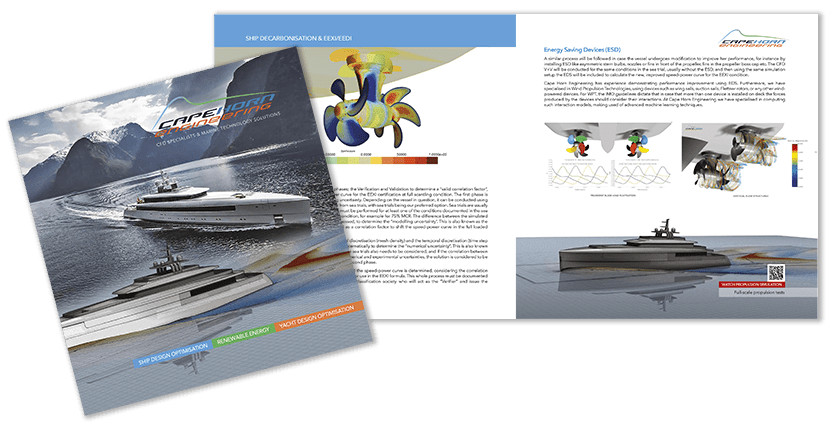
CFD Ship Design Optimisation and Performance Analysis
Commercial Ships, Service Operation Vessels & Work Boats
Cape Horn Engineering has pioneered RANSE-based CFD since its very beginning, with continuous investment in research and development. Thanks to our proven expertise in the America’s Cup, Volvo Ocean Racing and other high profile sporting events, we can apply this cutting edge technology to a wide variety of other marine applications including commercial cargo ships, service operation vessels, cruise ships, work boats , fully foiling and foil assisted high speed vessels, advanced and unconventional vessels, to improve performance, comfort and safety, increase energy efficiency, and to save fuel and reduce emissions.
Our specialist CFD technology and expertise is at the forefront of new design solutions to enhance energy efficiency in the shipping industry.
- Who we serve: naval architects, shipyards, shipping companies, and class societies working on commercial ships, SOVs, cruise ships, workboats, superyachts, and advanced or unconventional vessels.
- What we deliver: full scale RANS CFD for hull and appendage optimisation, propulsion, seakeeping, manoeuvring, EEXI / EEDI, Wind Assisted Propulsion, cavitation and FSI analysis.
- Proof points: validated EEXI / EEDI workflow developed with Lloyd’s Register, ITTC Quality Control Procedures for Verification & Validation, and case studies with Naiad Dynamics, Humphreys Yacht Design, Smart Green Shipping, Windship Technology, Philippe Briand, and Vroon.
- Typical outcome: fuel savings of at least 5%, reduced emissions, improved seaworthiness and comfort, and reduced safety margin without over powering the vessel.
Using CFD Technology
Our ship design optimisation CFD capabilities
Cape Horn Engineering’s ship design optimisation CFD toolkit covers the full range of flow behaviours a modern naval architect needs to resolve, from free surface hydrodynamics to aerodynamic loads on the superstructure
- Free surface and viscous flow modelled simultaneously, at full scale.
- Full scale performance prediction for resistance and self propulsion.
- Fluid Structure Interaction (FSI) for appendages, sails and hull.
- Cavitation analysis on propellers, hydrofoils, and high speed craft appendages.
- Foil section optimisation loops that account for transition and cavitation.
- Automated shape optimisation of hulls and appendages using neural network response surface models and optimisation algorithms.
- Dynamic behaviour and seakeeping, resolving motions, accelerations, and added resistance in waves.
- Advanced flow visualisation and post processing, delivering load cases, internal forces, and moments that designers can feed directly into appendage dimensioning.
We share these outputs with clients through images, video animations, and interactive visualisation files, and we use virtual and augmented reality where they add value. Our engineering expertise, attention to detail, industry leading RANS CFD solvers, and powerful in house computing resources together underpin the quality of our ship design optimisation CFD deliverables.


Why full scale CFD changes the design process
Historically, naval architects have relied on towing tank tests to validate their final designs. However, the force similarities between a scaled physical model and the real ship cannot be achieved in a towing tank, which makes those tests complex and reliant on assumptions and empirical formulations.
Our ship design optimisation CFD workflow models the vessel at full size, capturing the stern wake and boundary layer effects directly at full scale, with realistic moments of inertia and VCG. Forces and moments can be decomposed by component (hull and appendages) and by physical origin (friction and pressure). Because no engineering component is ever isolated from its effect on the whole system, we run the hull, appendages, and propellers simultaneously, so the design process can be steered holistically for fuel efficiency, comfort, and safety.
The same full scale ship design optimisation CFD framework also supports aerodynamic simulations around the superstructure, capturing wind effects around exhaust vents to investigate where smoke will travel for passenger comfort. Compared to physical models, this workflow delivers substantial reductions in project time and cost.
Areas where we can help...
- Hull and appendages performance and optimisation
- Propulsion, propeller selection, fuel consumption, delivered power
- Cavitation on propellers and
- Energy Saving Devices (ESD)
- Energy Efficiency Design Index (EEDI)
- Manoeuvres according to ITTC procedures
- Appendage torque and bending moments, load cases
- Seakeeping, added resistance, motions and accelerations
- Roll damping, performance of fin stabilisers, trim tabs and interceptors
- Fully foiling and foil assisted vessels
- Cavitation on hydrofoils and 2D foil section optimisation
- Fluid Structure Interaction (FSI) of appendages
- Occupant safety and comfort including local wind effects and exhaust gas
- Windage and structural wind loads on superstructures Ship Helicopter Operating Limits (SHOL)
- Slamming loads, water on deck, sloshing
- Global ship bending moments in waves
- Damage stability and ship launching, life boat launching
Benefits of using CFD technology
- Improved propulsion
- Improved fuel efficiency – fuel savings of at least 5% are realistic
- Reduced emissions
- CFD investigation can reduce the safety margin to avoid over-powering your vessel
- Improved seaworthiness
- Improved comfort


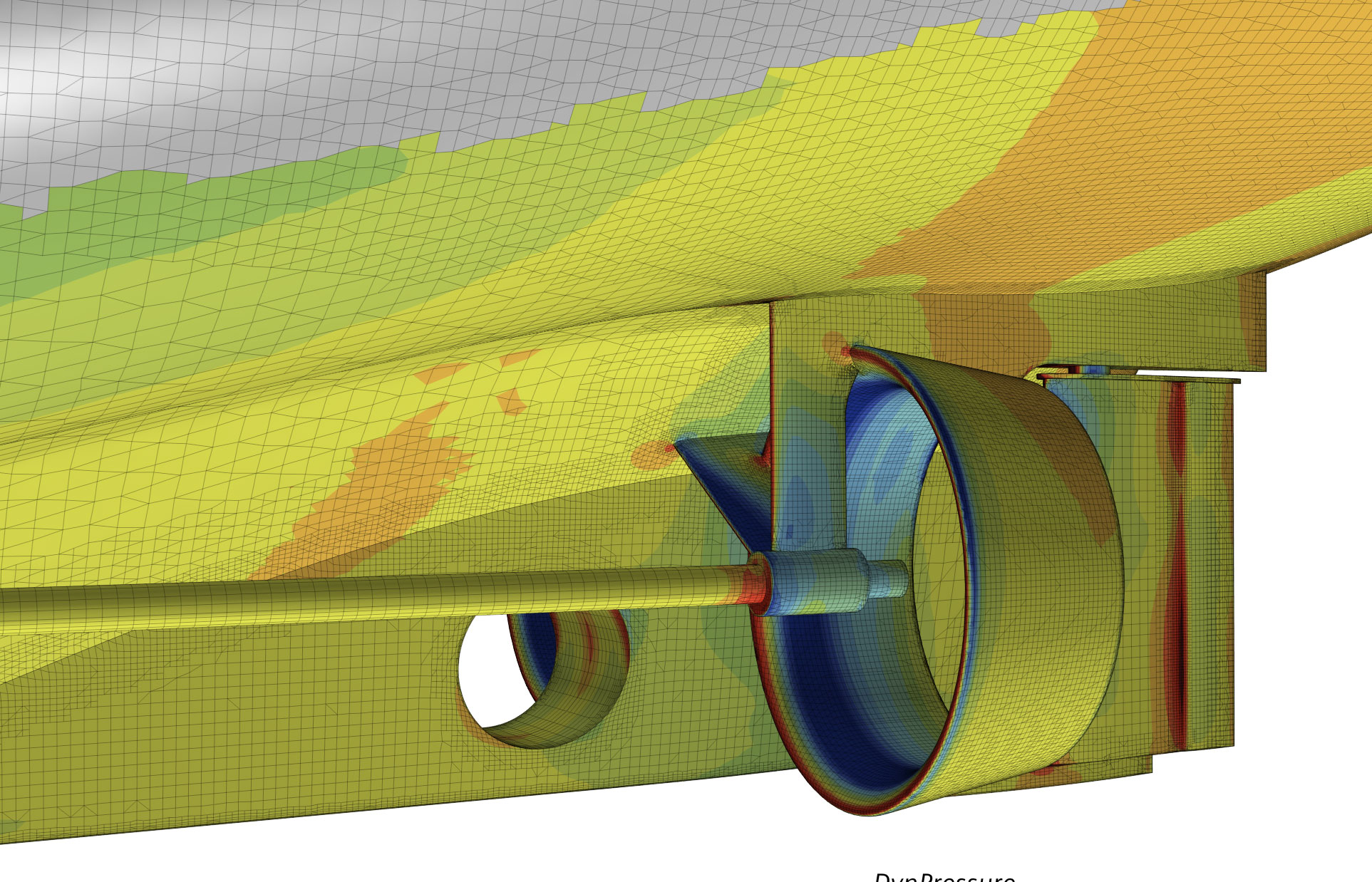
Advantages of CFD compared to tank testing
- Flow visualisation and animation to gain insight and understanding about differences between designs
- Simulations are 100% reproducible
- Hull or appendage shapes can be easily changed without building new models
- It is easy to test many design configurations i.e. to swap appendages
- Easily test in a variety of sailing conditions (speed, wave characteristics) to compare performance.
- Time and cost reduction
- All simulations are at full scale
- Simulations use realistic inertias and centres of gravity (something not feasible in tank testing)
- Oblique incident waves coming from any direction can be simulated, tank testing is usually limited to head waves
- Decomposition of individual forces and moments for the hull and each appendage
- Precise analysis of motion velocities, accelerations and trajectories of the body
Ship Decarbonisation & Energy Efficiency Performance (EEXI)
To help reduce emissions, we assist shipping companies with our specialist CFD technologies to investigate carbon-free energy alternatives and design solutions. We also specialise in EEXI/EEDI calculations based on high-fidelity RANS CFD and offer EEXI/EEDI calculations in a very efficient and cost effective manner, having developed validated workflows and Best Practice Guidelines in conjunction with a leading classification society (Lloyds Register) by testing potential solutions for vessels.

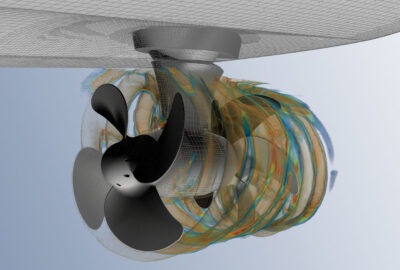

Innovative simulation for Wind Assisted Ship Propulsion (WASP)
What is Wind Assisted Ship Propulsion (WASP)?
Wind Assisted Ship Propulsion (WASP), sometimes referred to as Wind Propulsion Technology (WPT), is the use of wind powered devices on a motorised ship to reduce fuel consumption and emissions. According to recent industry studies, applying WASP to vessel types such as bulk carriers and tankers can deliver fuel savings and emission reductions in the region of 10 to 30%, which makes it one of the most promising near term levers for decarbonising commercial shipping alongside EEXI and EEDI compliance.
Cape Horn Engineering uses full scale ship design optimisation CFD to quantify those savings for specific vessels and specific routes, so owners, designers, and technology providers can make investment decisions based on evidence rather than brochure figures.
WASP devices we simulate
- Rigid wings and wingsails, including the Windship Technology solid wing rig and the FastRig concept developed with Humphreys Yacht Design and Smart Green Shipping.
- Soft sails and kites.
- Flettner rotors and other Magnus effect devices.
- Suction wings and other novel boundary layer controlled devices.
- Hybrid configurations that combine more than one of the above on a single vessel.
Our coupled air and water CFD workflow for WASP
Cape Horn Engineering has developed a ship design optimisation CFD workflow that directly compares the efficiency of WASP devices on a given vessel. The water flow experienced by the hull at a given vessel speed, and the air flow experienced by the hull topsides, superstructure, and WASP devices at a given wind speed and direction, are modelled simultaneously in a single simulation. This coupled approach captures the effects that matter most for realistic savings estimates:
- The aerodynamic interaction between devices, superstructure, and the deckhouse wake.
- The effect of heel and leeway on hull resistance and on rudder and propeller loads.
- Side force, yaw moment, and the additional drag the hull must overcome to hold course.
- The resulting change in delivered power, shaft RPM, and fuel burn at the operating point.
Deliverables typically include device polars (thrust and side force versus true wind angle and speed), vessel performance polars, route level fuel and emissions savings estimates, and class ready documentation to support EEXI and EEDI calculations. Our WASP work builds on long running collaborations with Windship Technology, Smart Green Shipping, Humphreys Yacht Design and more, and aligns with the International Windship Association (IWSA) framework for performance assessment.


Case Studies
See our case studies on Ship Optimisation
Simulations
Self-propulsion CFD simulation for the award-winning superyacht Najiba, with rotating propellers at a constant RPMto calculate the vessel speed and shaft power. The yacht is modeled in detail, with all appendages including roll sabiliser fins included.
Examples of CFD simulations carried out for motor yachts and commercial ships. Resistance, propulsion, seakeeping, slamming, exhaust gas on deck.
Demonstration for a 4 Degrees-of-Freedom simulation, with freedom for the yacht to move naturally though the waves. The open-water propulsion is based on the yacht propeller. The propeller torque is kept constant, and thrust and delivered power are variable.
Cape Horn Engineering has developed a simulation workflow to directly compare the efficiency of wind assisted propulsion (WASP) devices.
CFD simulations and analysis of solid wings. A new sail power concept designed by Windship Technology to reduce emissions for commercial shipping.
Turning Circle Manoeuvre of a 50m superyacht following the ITTC Recommended Procedure for Full Scale Manoeuvre Trials. 6 DOF simulation with active rudders and fin stabilisers.